
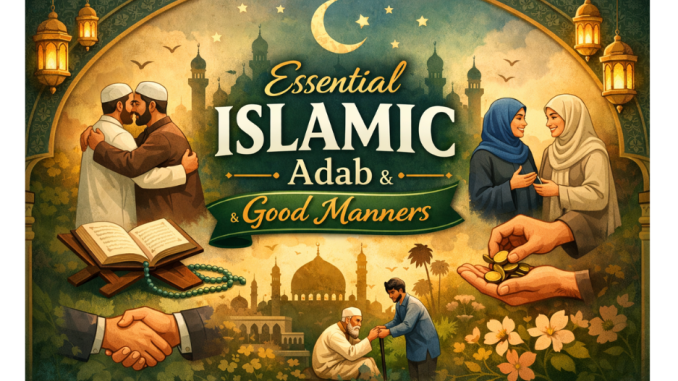
🌙 Islamic Manners and Etiquettes You Should Follow
Good manners and etiquettes are highly emphasized in Islam. Islamic manners (Adab) shape a Muslim’s character and reflect true faith. A person’s behavior, speech, and treatment of others show the strength of their Imaan. Following Islamic teachings not only strengthens your relationship with Allah but also improves your social and family life.
Islam is a complete way of life. It guides us in worship, business, family matters, and daily interactions. Practicing good manners creates peace in society and builds strong relationships based on respect and kindness.
✋ Greeting Others with Salaam
Always greet others with “Assalamu Alaikum.” It is a beautiful Sunnah of Prophet Muhammad (PBUH) and a powerful way to spread peace. Salaam is not just a greeting; it is a dua for the other person.
Responding to Salaam is obligatory, and spreading it among family, friends, and even strangers increases love and unity in the community.
❤️ Respecting Parents
Respecting and obeying parents is one of the greatest deeds in Islam. The Quran repeatedly emphasizes kindness toward parents, especially in old age.
Speak softly to them, never raise your voice, and always show gratitude for their sacrifices. Serving parents with sincerity brings immense reward and blessings in life.
🗣️ Speaking Kindly
Islam teaches believers to speak good or remain silent. Harsh words can hurt hearts, while gentle speech builds trust and love.
Prophet Muhammad (PBUH) said, “The best among you are those who have the best manners.” Controlling anger, avoiding gossip, and speaking truthfully are key parts of Islamic character.
🍽️ Eating Etiquettes
Islam provides clear guidance even in eating habits. Wash your hands before meals, say “Bismillah,” and eat with your right hand.
Avoid wasting food, as wastefulness is disliked in Islam. Eating together and sharing food increases barakah and strengthens bonds between family members.
🏠 Rights of Neighbors and Visiting the Sick
Islam gives great importance to neighbors. Help them when needed, avoid causing harm, and treat them with respect regardless of their religion.
Visiting the sick is also a highly rewarded act. It strengthens relationships and reminds us of compassion and gratitude for good health.
🙏 Modesty and Humility
Modesty is a core value in Islam. It includes modest dressing, humble behavior, and respectful interaction with others.
A modest person avoids arrogance and pride. Humility raises a person’s status in the sight of Allah and earns respect in society.
🌟 Benefits of Practicing Islamic Manners
Practicing Islamic Adab brings countless benefits. It increases love among people, strengthens family ties, and creates a peaceful environment.
Good character is one of the heaviest deeds on the Day of Judgment. A Muslim known for honesty, kindness, and patience becomes a source of positivity in the community.
Conclusion
Islamic manners and etiquettes are not optional; they are essential for building strong character and a healthy society. Small actions like greeting with Salaam, respecting parents, speaking kindly, and helping others can make a big difference.
Start practicing these manners consistently in daily life. With sincerity and patience, you will see positive changes in your relationships and spiritual growth.
Leave a Reply